

Living, working and free time in socialist Bucharest
program made by Ana Szel and Andrei Rus
How and where did the people of Bucharest live during the socialist period? What did their jobs look like? And where did they have fun and relax? Through the 27 archive films contained in the three thematic molds of the program, we aim to explore as many facets as possible of possible answers to these questions.
The program includes documentaries, commercials and utility films made between 1959 and 1986, most of them being produced by the “Alexandru Sahia” Studio, the institution most active in making such cinematographic projects in socialist Romania. Their themes are extremely varied and capture many issues relevant to the urban concerns of their era, from the construction project of the capital’s subway lines to the modernization and development of the city’s sewage system to the construction plans of blocks of flats and up to the translation of entire buildings through a unique technical procedure.
The tone of the films is also as varied as possible, oscillating between rather scientific registers, through which mechanisms and procedures specific to the work of construction engineers and architects are presented in detail, passing through celebratory registers, through which the beneficial effects of these are promoted actions on the population, and sometimes reaching moralizing valences, through which behaviors unsuitable for living in a big city are analyzed and criticized. Due to the nature of the production system that generated them, these films tend to represent the official perspectives of their institutional patrons. But, sometimes directly and sometimes between the lines, they document certain social realities faithfully enough to be an important starting point in the reconstruction of numerous urban phenomena of the socialist era.
We also included in the program some short films made in looser production systems to offer other types of perspectives on Bucharest’s past, sometimes surprisingly direct and nonchalant. Two of the short films were made by former students of the Faculty of Film from the only relevant university in communist Romania (the former IATC, the current UNATC), an environment more protected from political interference, which allowed, not infrequently, to approach some themes and formats difficult (though not impossible) to imagine in other production structures of the period. And a very short interlude of the program, the only one completely devoid of sound, is a contemporary montage based on a series of footage from the 1960s by some amateur filmmakers. The space of the amateur, of the cine-enthusiast, has the potential to render an unmediated, spontaneous historical present using the bottom-up perspective of the eyewitness. These images are chapters of a visually documented microhistory, which come to fill the gaps left by the institutionalized representations of history.
(curated text by Ana Szel and Andrei Rus)
LIVING IN SOCIALIST BUCHAREST
Thursday, November 9, 6 p.m., Cinema Elvire Popesco
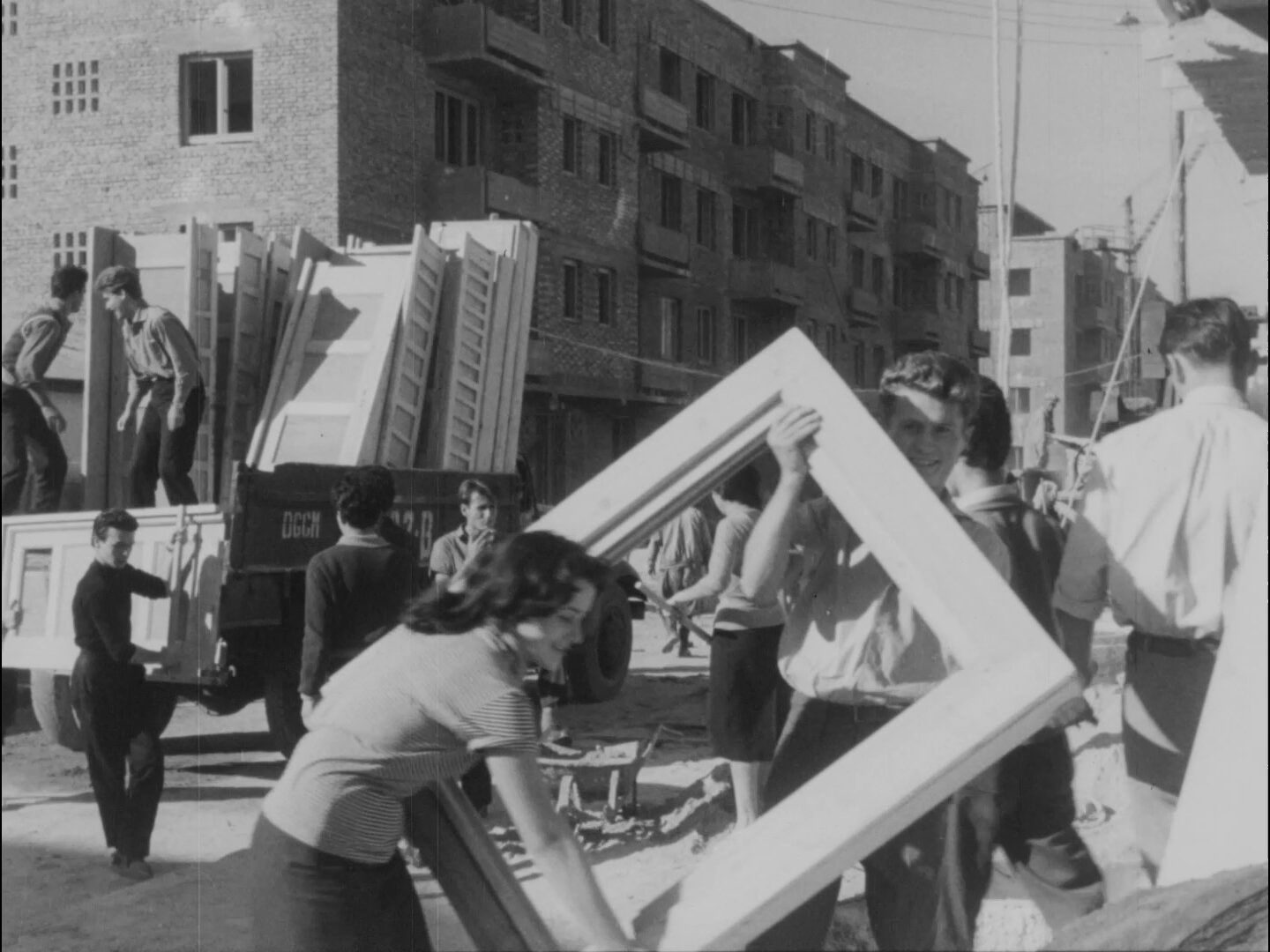
- Our neighborhood (1959, Jean Petrovici)
19 minutes
Produced at the request of the Executive Committee of the People’s Council of the capital, “Our neighborhood” follows the story of a locomotive engineer and his neighbors, newly assigned to the buildings built in Floreasca. Projected against the background of the new neighborhoods under construction, the narrative structure of the film preserves the spirit of socialist realism, but is strongly contaminated by the optimism and cosmopolitanism of the 1960s. Accompanied by rhythmic swing chords, we accompany the characters of this documentary, representatives of the working class, both to the places of work, as well as in the new apartments, bright and airy, integrated into the logic and aesthetics of the new socialist quarter.
- Our house like a flower (1963, Alexandru Boiangiu)
20 minutes
Specific to the seventh decade, the investigative film is a genre that apparently introduces a form of social criticism, by treating some negative phenomena (in this case, the disregard for the norms of shared living and the tenants’ responsibility for the well-being of the apartments in which they live), but which, in essence, aims to draw a series of prescriptions whose violation is criminalized and morally sanctioned at the level of society. Filmed by surprise, in some cases without the consent of those filmed, and even more so, against their interests, the documentary “Our house as a flower” differs stylistically from most of the productions of the “Alexandru Sahia” studio. Ciné-vérité influences are adapted to local reality in an invasive form, where the subject does not participate in the filming willingly or knowingly, and the film crew is invested with an authority equal to that of the state.
- Street Songs (1965, Pantelie Tuțuleasa)
13 minutes
“Melodiile strazii” is a symphony of Bucharest in the 1960s, describing details of the daily life of the residents of Grivița street and highlighting the major changes brought to the neighborhood during the decades of communism. The tone of the film is light, starting with a song dedicated to the Grant Bridge and continuing, in jazz-inspired rhythms and with visual references to the constructivism of Dziga Vertov’s documentaries, with the presentation of contented residents as tonic as the music that accompanies their steps.
- Silence (1963, Alexandru Boiangiu)
10 minutes
“Silence” presents, in the form of a prolonged nightmare of the protagonist, various sources of noise produced by living in a big city like Bucharest. I can capture the playfulness, the comic register and the rather low moralizing level of the film, which works as an allegory of modern urban life, where the only solution is to get a good night’s sleep, despite the screams of neighbors and the noise caused by horns and engines cars, it seems sometimes to pull the duvet over your face (or over your ears) and dive into a parallel dream universe.
- On the City Streets (1980, Zoltan Terner)
10 minutes
This investigative film recorded on the streets of Bucharest is part of the series of broader civic education initiatives initiated by local administrations and central bodies. Commissioned by the Public Hygiene and Health Institute, in collaboration with the Red Cross, the documentary criticizes the lack of initiative and civic attitude of the city’s residents, who do not consider themselves personally responsible for keeping public spaces clean. A sanitary patrol admonishes negligent passers-by, inspects the streets and vacant lots in the neighborhoods and in the city center – unsanitary places littered with garbage and household waste and which, beyond their unsightly appearance, constitute potential of infection in urban agglomerations. The end of the film presents an optimistic picture, in which the cleanliness of the city is restored with the participation of all residents, from small to large.
- Calea Moșilor, past and present (1984, David Reu)
10 minutes
The film reconstructs the history of an important commercial area of the capital, Calea Moșilor, promoting the attempts of the communist authorities to integrate the newly built blocks into its ancient architectural ensemble, which still preserves a series of valuable monuments. On the other hand, the policy of replacing the slums and unsanitary spaces of the past with spacious blocks is also presented, the microphone being sometimes handed to the residents of Calea Moșilor, to tell us what they think about the benefits of the architectural plan of the area. The artist Anda Călugăreanu, for example, sings us a gentle song, accompanied by the guitar and her daughter.
- Good and bad (1986, Pompiliu Gâlmeanu)
9 minutes
Filmed at the non-family homes in the Pipera area, in sector 2 of the capital, “The Good and the Bad” is both a criticism of the poor living conditions offered to tenants by the administrators of the buildings and a moralizing analysis of the behaviors not suitable for city life of many of the tenants. Initially insisting on some counter-examples and directly and sharply drawing the attention of the impure people to the irregularities noticed in their customs or management, the filmmakers conclude their plea by presenting another model home of non-familists, where the cleanliness and good decency of the neighbors replace the disorder and indolence of the former.
- Find out about me, that I am well and healthy, and what I wish for you as well… (1982, Adrian Sârbu)
17 minutes
A landmark social documentary for the perspective of the generation of eighties filmmakers, the cinematic epistle “Find out about me…” describes aspects of the social landscape of the urban periphery. Filmed in the homes of non-familists, the documentary traces the grassroots effects of labor migration from agriculture to industry and from rural to urban environments. Registered in the registers of the hostel managers, the tenants and tenants of these comfort III studios on the outskirts of the city confess in the space lacking privacy, they give individual faces and voices to this phenomenon specific to the socialist period. The documentary has an elaborate soundtrack, which superimposes the informal tone of the recorded interviews over the monotonous backgrounds of everyday life – young people watching the games, the TV series “Dallas”, studying, training, dancing at specially organized evenings. Panning from one window to another, the camera discovers the setting and the daily concerns of the young people who live temporarily in the hostel, but dream of overcoming this temporary stage and settling down at “their homes”.
Duration of the program: 108 minutes
Program and curatorial texts by Ana Szel and Andrei Rus.
FREE TIME IN SOCIALIST BUCHAREST
Saturday, November 11, 8:30 p.m., Cinema Elvire Popesco
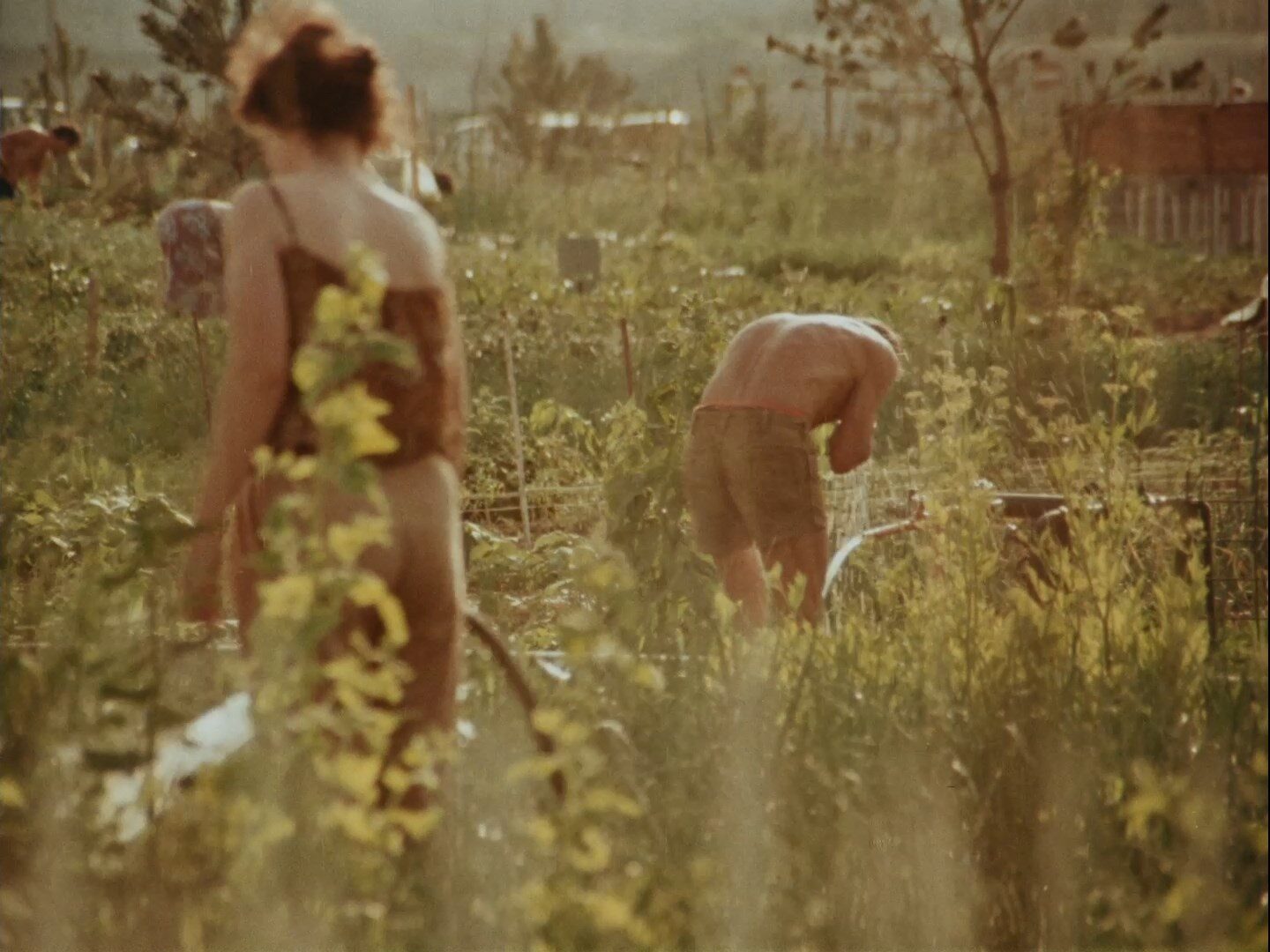
- The Gardens of Labor (1977, David Reu)
10 minutes
A film about the Pantelimon district in which various workers who work and live in this area express their admiration for their construction counterparts responsible for the design and construction of modern parks, blocks and factories, “Labour Gardens” does not miss the opportunity to draw comparisons between present and past, including archival images of the appearance of the neighborhood before the socialist reconstruction. The finale is dedicated to the nature offered in abundance to the residents of the parks and streets of Pantelimon, the chorus of a song performed by Mihai Constantinescu accompanying bucolic images of sunrises and sunsets, with various intensely colored flowers and people playing among the trees, sitting at the beach or diving in the waters of the blue lake.
- New technique, cultured people (1963, Alexandru Sârbu)
16 minutes
The ease with which the filmmakers combine moments of true musicality, with various workers performing songs full of patriotic and proletultist momentum, with bossa nova, jazz or folklore-inspired sounds, accompanies an equally complex mix of individual stories and collectives of those in the factory. The exemplary cases presented are, in turn, accompanied by summaries of the factory’s products and their technical characteristics, as well as the ways of spending the free time of the workers – from evening university courses, to dance, theater or reading evenings of books borrowed from the factory library.
- Cineclubists in the mountains in winter (cineclub material 1964-1966 edited by Roxana and Ana Szel)
4 minutes
Taking over the Soviet model, the first amateur cinema clubs in Romania appeared in 1957, in Timișoara and Bucharest, and were organized within the Student Culture Houses and the Trade Union Culture Houses near factories and plants. By 1989 these cineclubs operated across the country and produced fiction, documentaries, animation and experimental films on 35, 16 and 8mm film and, starting in the 1980s, on VHS.
The raw material from which the few fragments presented here are extracted was filmed on 16 mm support, without sound, by the members of the Studiofilm cineclub from Bucharest, during the period 1964-1966, on the occasion of the winter camp organized for students. The filmed images capture synthetic, conventional, reportage-type poses, and at the same time have the candid air of vacation home movies. The material belongs to the National Association of Cineclubs and Non-Professional Filmmakers from Romania, via cineama.ro.
- Sunday gardeners (1985, Ion Visu)
10 minutes
A report on an unusual urban activity, “Sunday Gardeners” is dedicated to those people who, in their spare time, have changed the “concrete square” of the apartment building they live in, for a plot of arable land that they care for. Young and old, men and women, as well as children gather after hours and at the end of the week at the “Fundeni vegetable garden” in sector 2 of the capital, where they grow vegetables and flowers, dig, water, weed, exercise and spend time outdoors.
- Bucur-Obor (1980, Stelian Penu)
14 minutes
An advertisement for visiting the Bucur-Obor store, the film presents the various districts of this largest shopping complex in the country at that time, a real “mall” offering everything for everyone – toys, clothes, food, musical instruments, band records Romanian or foreign and even a disco for night visitors. “Bucur-Obor” introduces us to the management of the store, but also to some of the employees, who are said to be made up, styled and dressed according to the latest fashion, to meet the modern standard of the place. One of the most delightful scenes is the one in which various French, Russian or German customers (most likely played by heavily accented Romanian actors) interact with the staff – a further indication of the store’s cosmopolitanism.
- Silver Sage (1971, Adrian Ianuli)
11 minutes
The film presents the clean-up actions of the lakes around Bucharest, started in 1968. The construction of the Străulești bridge and the cleaning of the Mogoșoaia lake are also described. Among the other parks captured in 1971, when the documentary was made, are Herăstrău, Cernica, Tei and Pantelimon II, all of which are important leisure spaces for the residents of the various neighborhoods of the capital.
- Athenée Palace (Leonard Suciu)
2 minutes
A short promotional clip for the legendary club Athenée Palace, the film is a pop presentation of the night entertainment offered by this space of loss. Scantily clad female dancers, sweaty singers, all manner of bacchanalian attractions seasoned with a psychedelic musical ambience recreate a western atmosphere, where the audience (male and female alike) are relaxed and barely visible in the chiaroscuro of cigarette smoke, and the performers offer themselves to the gaze indiscreet and greedy for exotic experiences.
The film is part of the Active Archive program, which digitizes and makes accessible films from the UNATC archive, https://arhiva.unatc.ro/filme-unatc/.
- Vacation (1978, Ada Pistiner)
10 minutes
The whistle of the train in the station, the drawings with colored chalk on the asphalt or the megaphone announcing the daily schedule contribute to recalling the atmosphere of the holidays spent on the shores of the Black Sea in the Năvodari camp for generations of school and high school students. Without off-screen commentary, built from small moments that mark the activities arranged in an orderly manner throughout a day, Ada Pistiner’s documentary is an ode to the endless hordes of tanned children who run, play, eat, swim or spend the evening by the campfire.
- Antiinterview (1983, Tudor Potra)
17 minutes
A portrait of cartoonist Mihai Stănescu, this student film made in the early 1980s offers a nonconformist representation of an artist who expresses himself casually, both in front of the camera and in his drawings. The construction of the documentary enters into a kind of dialogue with the ironic and tonic spirit of the protagonist’s lines, extracting, from time to time, scenes of an absurd or burlesque comic from the daily life of the city.
The film is part of the Active Archive program, which digitizes and makes accessible films from the UNATC archive, https://arhiva.unatc.ro/filme-unatc/.
Program duration: 94 minutes
Program and curatorial texts by Ana Szel and Andrei Rus.
WORK IN SOCIALIST BUCHAREST
Sunday, November 12, 9 p.m., Cinema Elvire Popesco
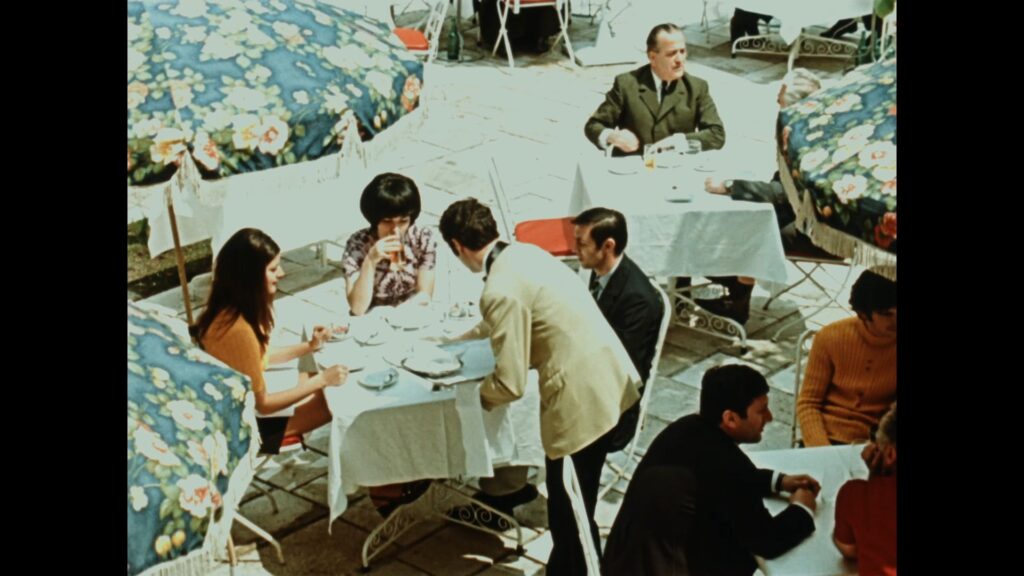
- The Bucharest Metro (1981, David Reu)
10 minutes
A monograph of the Bucharest metro after three years of operation, the documentary directed by David Reu follows the construction work of this means of urban transport from the design phase to its commissioning in December 1979. Beyond the tone, almost indispensable in the production non-fiction of the ninth decade, which conforms to the line of political propaganda, the film describes in impressive images the underground construction site with wide galleries that double the main traffic arteries and that connect the newly inaugurated stations on the Timpuri Noi – Semănătoarea section. These “underground palaces” of Bucharest, which at that time shone impeccably, provide the daily transport of tens of thousands of people.
- The Factory (1963, Slavomir Popovici)
17 minutes
One of the most famous Romanian documentaries of its era, “The Factory” seems strongly influenced by the experimental audio-visual constructions of the Soviet avant-garde movement of the 1920s. Putting together all kinds of fragments and motifs relevant to the everyday life of the working class from the first communist decades, the film creates a collage in which individual examples merge with the lyrical description, marked by formal constructivist accents, of the reality of modern socialist factories.
- Dâmbovița and Bucharest (1980, Alexandru Sârbu)
10 minutes
Having a didactic function, this useful film describes the route of Bucharest’s drinking water supply, whose main source, the Dâmbovița River, is followed in wide panoramas and with the help of animated graphics, from the springs in the Iezer Mountains to the discharge into the Argeș River . Aspects related to hydrographic infrastructure are built in order to prevent floods in the capital (the last overflow of such proportions took place in 1975) and the discharge of waste water, important problems for a city like Bucharest, which was then, and now, continuously growing.
- Tanneries (1963, Mirel Ilieșiu)
11 minutes
An illustration of the evolution of the condition of workers in the communist era, compared to the interwar period, using as a pretext a recently modernized factory in Jilava, presented in mirror image with the one described in a 1934 report by Geo Bogza, “Tanneries” is a more complex cinematic construction and more discreet than the simplistic past-present antithesis, so important in the economy of Marxist propaganda art, might suggest.
- Elements of ergonomics in the work of builders (1974, Aurel Miheleș)
8 minutes
Commissioned by the Ministry of Constructions in order to train workers who work on industrial sites, this utility film produced by the “Bucuresti” cinematography studio has as its central theme ergonomics, a discipline that deals with the psycho-physiological understanding of work processes in order to optimize the production flow in the system industrial, obtaining an optimal yield and at the same time eliminating the risk of injury to workers. “Elements of ergonomics in the work of builders” is therefore a study in the Stahanovist, but also Taylorist spirit of the various types of physical demands to which construction workers are subjected in order to standardize and make their efforts more efficient.
- Let the summer pass (1972, Florica Holban)
10 minutes
One of the strongest pleas for a normalized society, “Let the summer pass” presents young men and women who, through the activities they carry out, break out of the legal framework established by the socialist state. Some of them are understood to be doing various illegal jobs, others are not working at all, and some of the protagonists are sex workers, insisting for several minutes on their life stories. Despite the undignified situation in which these protagonists are placed, some today seem more like prototypes of rebels without a cause. A young man’s response, in which he mocks those who do not know who Jimi Hendrix is, makes him more likeable and relatable today, although it causes the narrator a vehement reaction of rejection. You want to know who is hiding in that sinister penumbra constructed by the filmmakers, seek them out and take them out for a beer.
- When beauty is useful (1968, Alexandru Sârbu)
10 minutes
“When beauty is useful” is a documentary about the aesthetics of new industrial spaces designed according to modern standards that aim to improve working conditions, thus contributing to an increase in productivity. This concern for better lighting for the judicious and ergonomic organization of production spaces is illustrated by a series of eloquent examples: a space filmed before and after the renovation and reorganization of the work premises or an experiment related to the psychology of colors. The film proposes a new look at the functionalist aesthetics of industrial spaces, the plasticity of exterior spaces, and the premises of recently built factories and plants, as well as the futuristic design of new steel, food or chemical industry enterprises.
- The technique of serving breakfast (1972, Lupu Gutman)
10 minutes
A summer morning on a sunny terrace is the backdrop for the breakfast demonstration in this educational film for catering employees. Standardized utensils and accessories for the several culinary variations of the menu are explained in detail, as well as serving and disposal arrangements and techniques.
- Liability for quality (1984, Ada Pistiner)
11 minutes
“Liability for Quality” presents various examples of situations where objects of all kinds – from shoes and socks to teapots and other china – are either carelessly made, have manufacturing defects, or are, to all appearances, the unsightly result of a production fusherites The criticism is incisive, and the voice of the reporter who captures the workers and merchants during working hours does not condone any errors and does not accept any lazy explanations for the shortcomings of the products they make or sell.
- Our house on wheels (1984, Alexandru Boiangiu)
10 minutes
As part of the works to systematize the Ștefan cel Mare artery, in addition to replacing some dilapidated houses with new and spacious blocks, the engineers are experimenting with a novel procedure, of transferring on wheels a group of buildings that do not harmonize with the rest of the housing complex . The film describes in detail the technique of transferring real estate, pointing out the uniqueness of the process internationally.
Duration of the program: 108 minutes
Program and curatorial texts by Ana Szel and Andrei Rus.