Catalonia: Housing Through Collaboration – Exhibition Opening
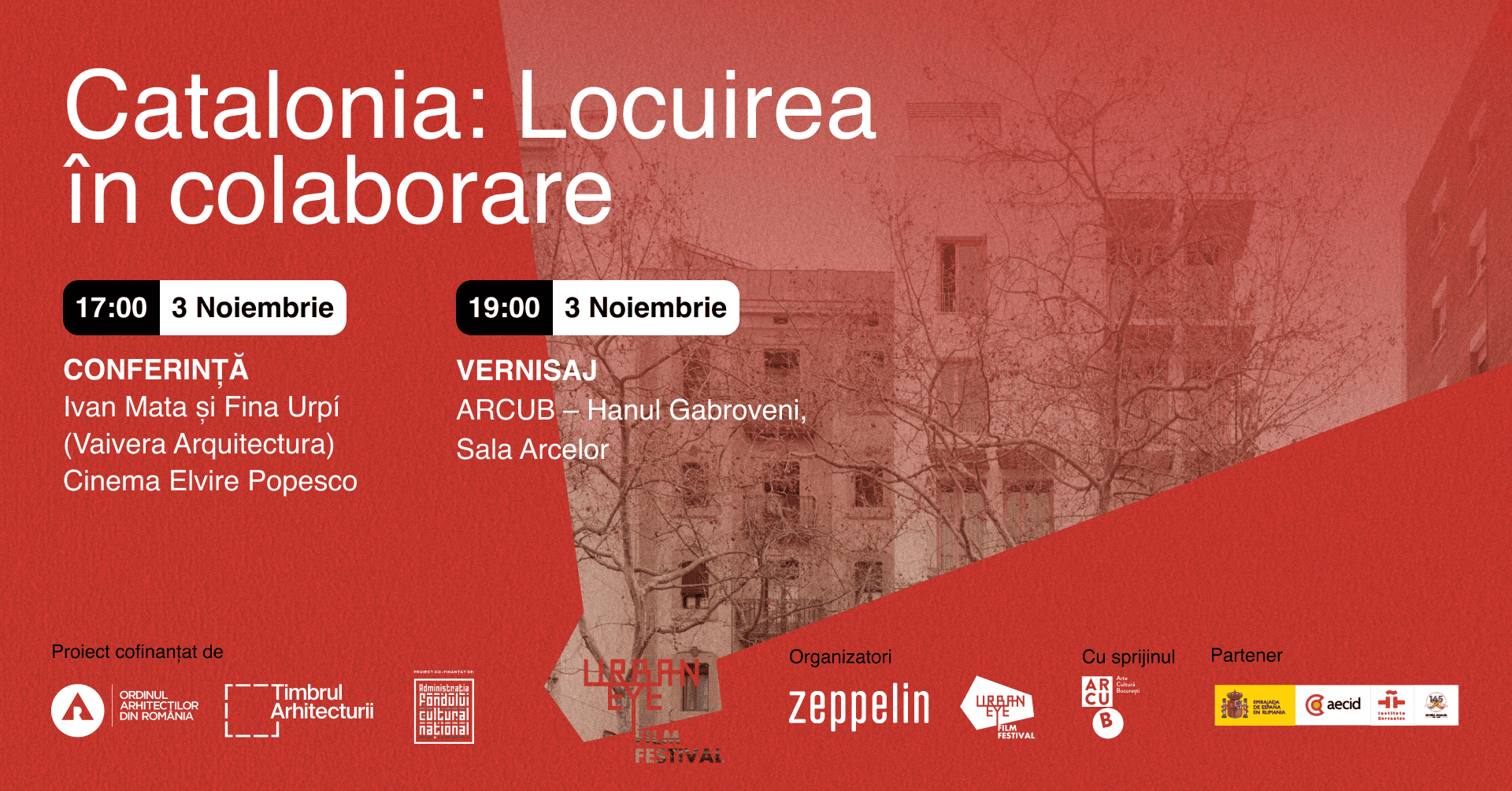
On 3 November, Zeppelin Magazine and UrbanEye will open the exhibition Catalonia: Housing Through Collaboration at ARCUB – Gabroveni Inn, Arcelor Hall. At 5:00 PM, architects Ivan Mata and Fina Urpí (Vaivera Arquitectura), co-curators of the special feature in Zeppelin #179, will discuss the Catalan model in the Spanish and European context at Cinema Elvire Popesco. The exhibition opening at ARCUB will begin at 7:00 PM.
The exhibition will be open until 22 November, with free admission. It will be accompanied by a special feature in issue 179 of Zeppelin Magazine.
Having a home is a right. Some constitutions recognise it, and some countries, cities, and local authorities are actively working to address a very real housing crisis. We have identified one country – Spain – and, within it, a region that is tackling this challenge with great enthusiasm and, more importantly, with a plan that is continuously being refined: Catalonia.
At a time when public authorities are struggling to meet housing needs, Catalonia has developed a response by making publicly owned land available for nearly a hundred years, allowing residents organised in various forms of association to build what is known as cooperative housing.
We know that, for many of us, the word cooperative brings back bitter memories of enforced communal living and the top-down imposition of arbitrary and harmful rules. What we present here could hardly be further from that experience. Despite the similar terminology, cooperative housing in this context involves a high degree of community participation, freely chosen by residents themselves and often achieved after sustained pressure on public authorities.
It is, in other words, a bottom-up process and a particular form of cohousing, in which residents also become investors and architectural design becomes a participatory process.
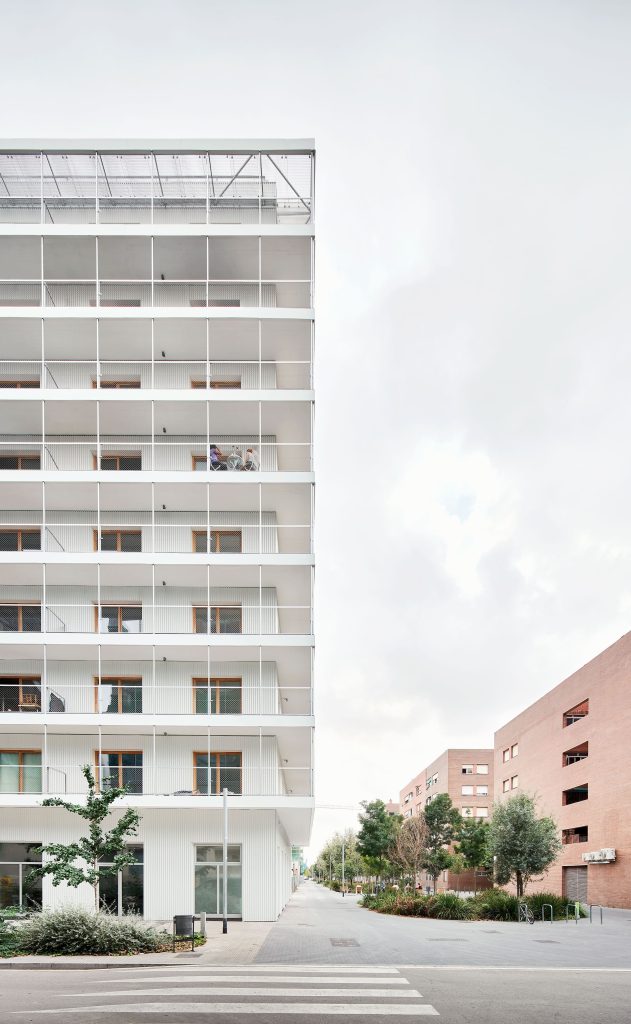
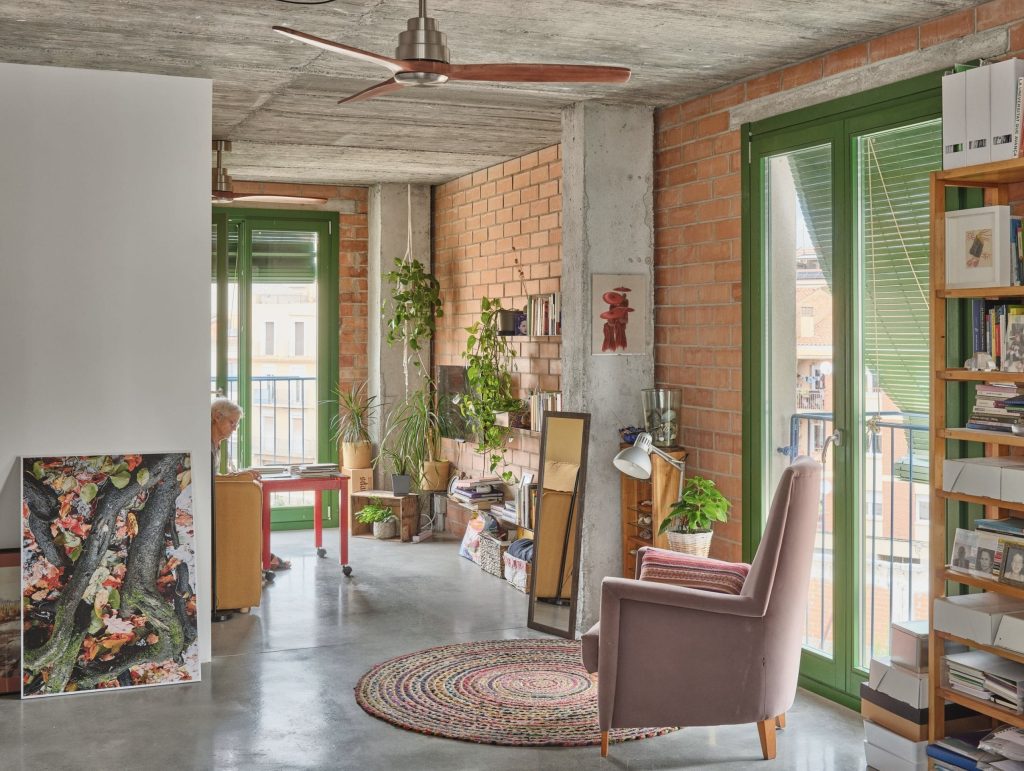
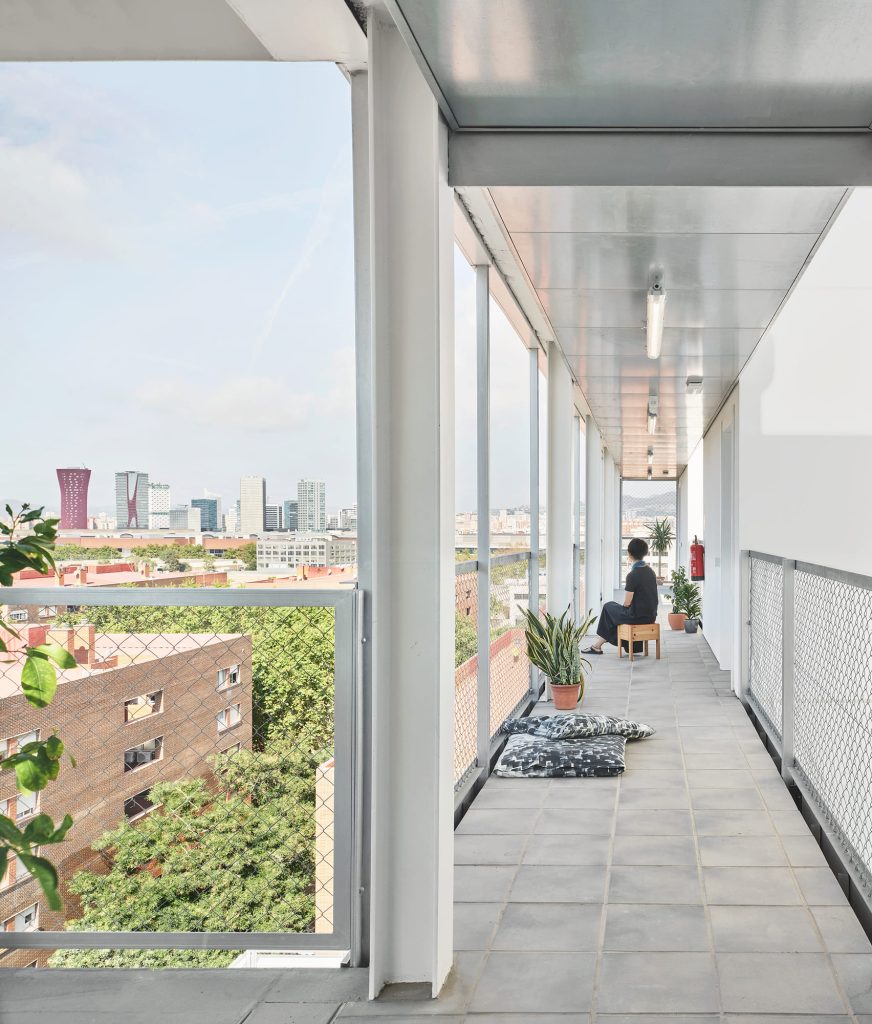
Beyond its administrative particularities, this form of housing opens up exciting new possibilities for architecture. The buildings range from cluster housing, where private spaces are kept to a minimum and arranged around shared kitchens, dining rooms, and sometimes even bathrooms, to cooperative housing developments comprising smaller, fully equipped apartments complemented by generous communal spaces.
The buildings featured in the exhibition respond simultaneously to the housing crisis and the climate crisis. Some feature central bioclimatic atriums that help reduce heating requirements; others employ passive design strategies to approach zero CO₂ emissions. Many use concrete only where absolutely necessary, replacing it with timber structures wherever possible.
Moreover, in some buildings, the minimal finishing of individual apartments becomes an opportunity for flexibility, allowing residents to personalise their private spaces.
We are delighted to present projects at a wide range of scales: from homes for older people in rural areas and urban infill developments in historic centres to large-scale housing projects on the outskirts of cities, which nevertheless remain well connected to urban life through excellent public transport networks.
This diversity also reflects the different communities behind each cooperative: people who would otherwise struggle to afford housing of this quality, those simply seeking a way of life less influenced by consumerism, families with children, and groups united by strong social principles.
The exhibition also opens a conversation about Romania, presenting the country’s first cohousing project and a platform for new initiatives, alongside a discussion with Bogdan Suditu about the obstacles and opportunities we face in addressing the housing crisis.
Ivan Mata and Fina Urpí, founders of Vaivera Arquitectura, will join us on 3 November. Starting at 5:00 PM, they will present the cooperative housing movement and one of their own residential projects at Cinema Elvire Popesco. At 7:00 PM, we will open the exhibition at ARCUB – Gabroveni Inn.
Practical Information
Exhibition: 3–22 November 2026 · ARCUB – Gabroveni Inn, Arcelor Hall, 84–90 Lipscani Street, Bucharest
Opening hours: Wednesday–Sunday, 12:00 PM–8:00 PM
Conference: Ivan Mata and Fina Urpí (Vaivera Arquitectura), 5:00 PM, Cinema Elvire Popesco, 77 Dacia Boulevard, Sector 1, Bucharest (inside the French Institute in Romania).
Exhibition opening: ARCUB – Gabroveni Inn, 7:00 PM
Organisers: Zeppelin Magazine and UrbanEye Film Festival
Exhibition co-curators and co-editors of Zeppelin Magazine: Ivan Mata, Fina Urpí, Cătălina Frâncu, Ștefan Ghenciulescu
Exhibition design: Zenaida Florea, Cristian Bădescu – Atelier Vrac
Graphic design: Policromic
Partners: ARCUB, Cervantes Institute, French Institute, Cinema Elvire Popesco, Apollo111 Cinema, Polish Institute, Czech Centre, Austrian Cultural Forum, German Embassy, Cărturești
Media Partners: RFI România, Radio România Cultural, Scena9, Igloo, Revista Arhitectura, IQads, Vorbitorincii, Zile și Nopți, Observator Cultural, LiterNet, Cinefilia, CineFan, MovieNews, AIVI Media, Filtru Cultural, Zavatos, Aici a Stat, Happ.ro, Munteanu Recomandă, Subversiv
Funders: Romanian Order of Architects and the Administration of the National Cultural Fund (AFCN)
The exhibition Catalonia: Housing Through Collaboration is part of the 13th edition of the UrbanEye Film Festival, a project by the ARTA în Dialog Association, co-funded by the Romanian Order of Architects through the Architecture Stamp Duty and by the Administration of the National Cultural Fund.
The project does not necessarily reflect the position of the Administration of the National Cultural Fund. AFCN is not responsible for the content of the project or for how its results may be used. These are the sole responsibility of the funding beneficiary.
Press contact: comunicare@urbaneye.ro
We use cookies to store and process information for improving your experience. Please review our Privacy Policy.