

Imaginaires de Transformation: Lacaton & Vassal et Frédéric Druot / Visions of Transformation: Lacaton & Vassal and Frédéric Druot
Visions of Transformation: Lacaton & Vassal and Frédéric Druot
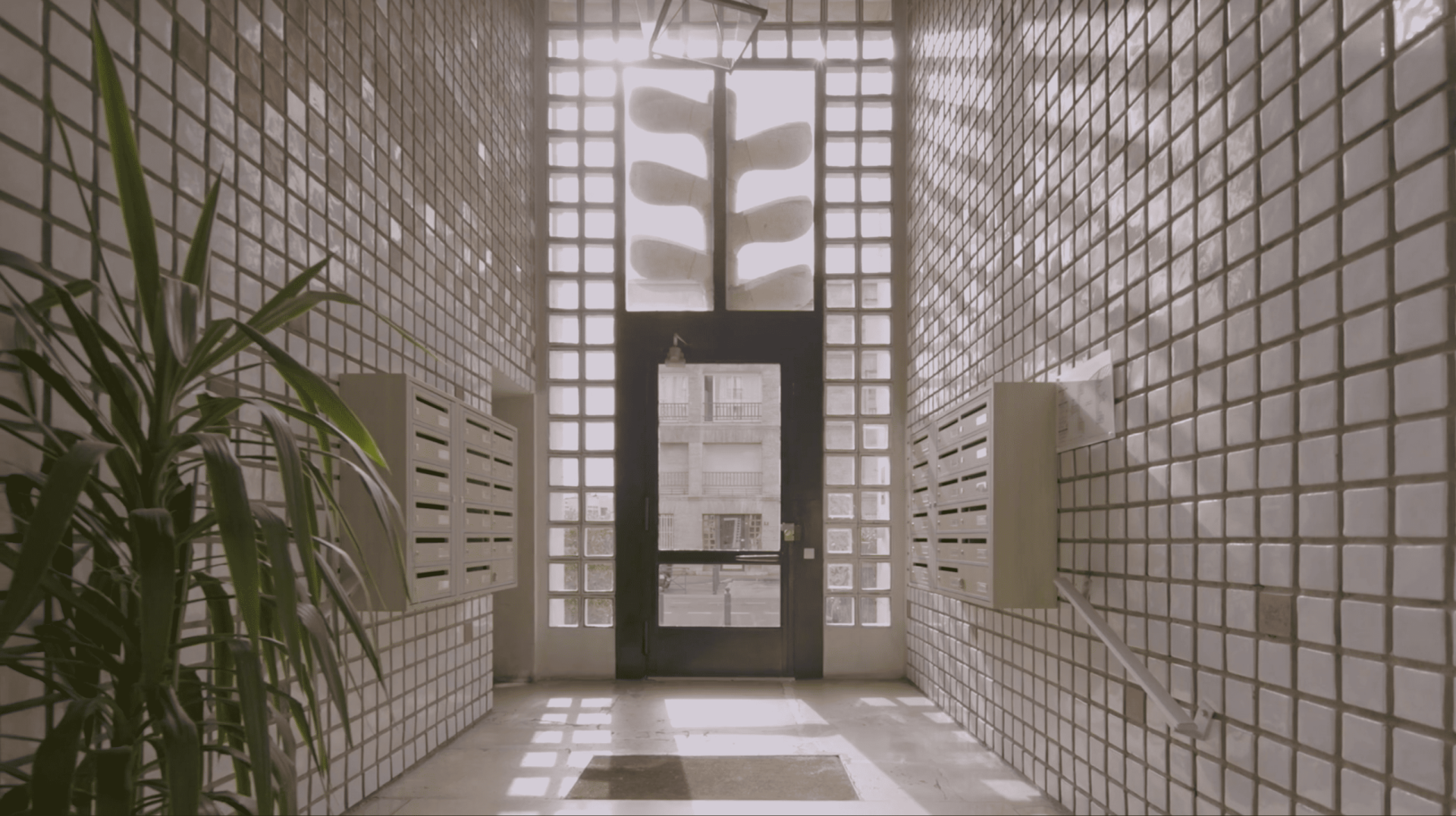
Architects Anne Lacaton, Jean-Philippe Vassal and Frédéric Druot strongly opposed the French government’s policy of demolishing and rebuilding social housing, introduced in 2003, choosing instead to transform existing buildings. For them, transformation means, above all, changing the way we look at architecture and the city. The film follows an informal conversation between the three architects, interspersed with footage from the construction site at Cité du Grand Parc in Bordeaux. Here, three housing blocks from the 1960s were extended rather than demolished: a prefabricated structure was added to the existing façades, extending each apartment by almost four metres in depth, without residents having to move out during construction. In 2019, the project received the European Union Prize for Contemporary Architecture – Mies van der Rohe Award.
Fernand Pouillon, France’s Most Wanted Architect
Fernand Pouillon, once described as “France’s most wanted architect”, built more than five million square metres over his fifty-year career, mainly in France and Algeria. Pouillon flew thousands of kilometres every week in propeller planes, travelling from one construction site to another: Marseille, Paris, Algiers, and even into the middle of the desert. All in pursuit of one principle: to build “better, cheaper and faster than others, so that everyone could live decently”. His secret was stone, mechanically cut at the quarry into large standardised blocks, a material he used in projects such as Climat de France – a housing complex built in Algiers for the city’s poorest Algerian residents – or the reconstruction of buildings in Marseille’s Old Port, destroyed during the war. At a time when large housing estates were being built from precast concrete, Pouillon gave social housing the quality and appearance of luxury buildings. But it all came to an end when Pouillon fell out of favour with the authorities, was imprisoned in the 1960s, escaped under mysterious circumstances and was subsequently almost forgotten.
Beyond his tumultuous life, his social housing projects remain, and his housing estates possess qualities that could still help solve some of the problems facing large housing developments today.
The films Imaginaires de Transformation: Lacaton & Vassal et Frédéric Druot and Fernand Pouillon, France’s Most Wanted Architect are screened together.