AT HOME IN THE EASTERN BLOC: FIVE PERSPECTIVES ON COLLECTIVE HOUSING DURING THE SOCIALIST ERA
There are more than 200 “new towns” and numerous “satellite neighbourhoods” across Europe. Built from scratch in the post-war period using standardisation and prefabrication, they were designed primarily to house the industrial workforce. Although developed in different contexts, they share similar origins, functional organisation, design principles, and age. In Eastern Europe, during the era of state socialism, large housing estates embodied a vision of housing as a right rather than an economic privilege, providing equitable infrastructure for collective life.
At Home in the Eastern Bloc brings together a selection of documentary films made in different Central and Eastern European countries – Czechoslovakia, Poland, the German Democratic Republic, and Romania – between 1959 and 1987, depicting newly built collective housing developments. These productions capture different stages in the lives of these estates, from partially inhabited construction sites and the stories of their first residents to everyday neighbourhood life, the formation of social connections, and the emergence of distinctive ways of living.
Presenting documentaries from several socialist countries reveals surprising similarities, as well as nuances that distinguish each place. Spanning a variety of approaches, from essays and investigative reports to monographs and sociological research, these representations of housing reflect both official discourse and the filmmakers’ scope for independent expression, alongside the social realities and everyday experiences of residents.
In today’s regional context, where these housing estates are often perceived as places without history or identity, serving merely as places to live, we hope that the films brought together in this programme will reopen the conversation about these neighbourhoods, whose complex social histories form a shared legacy of the public housing project.
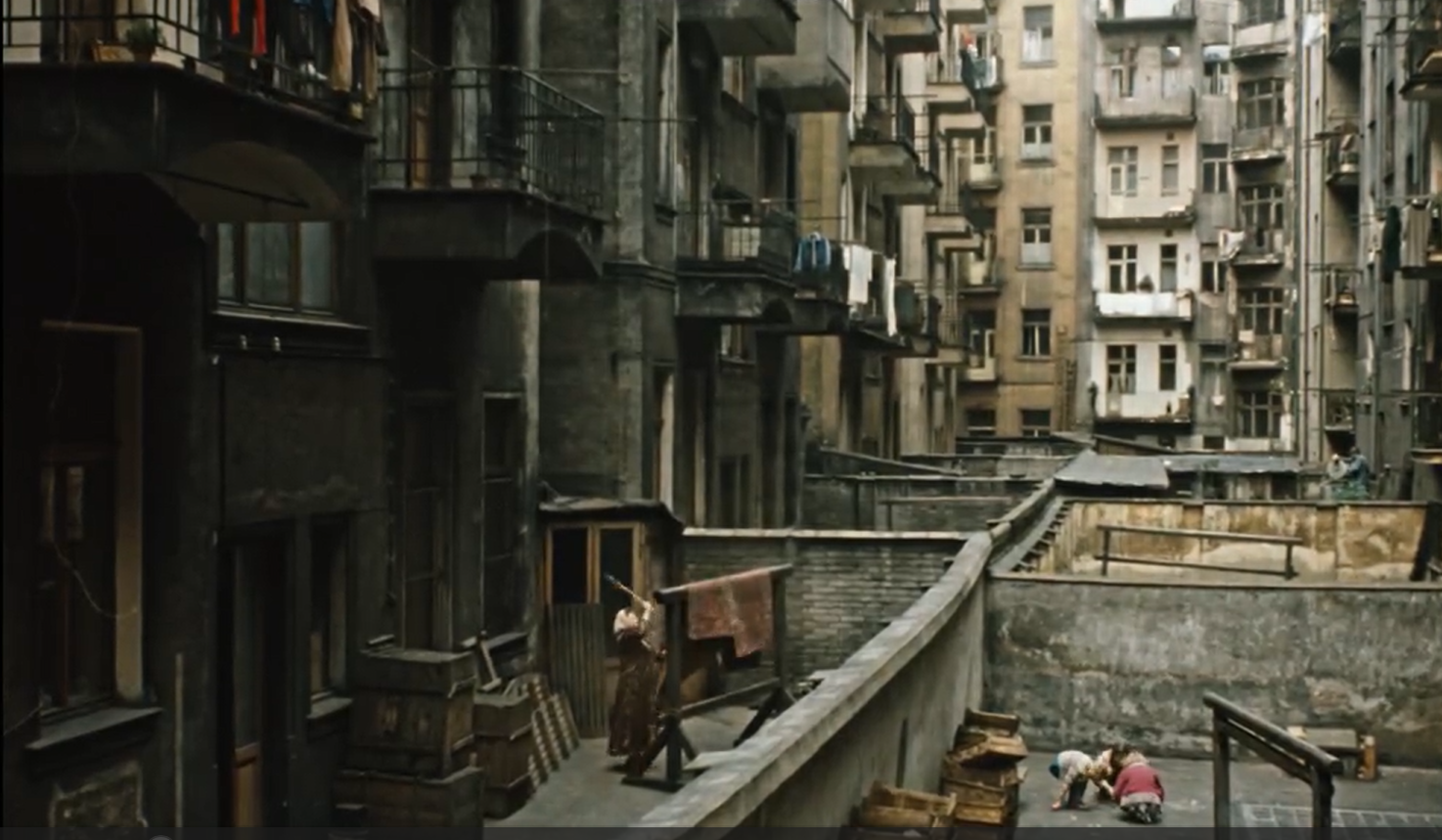
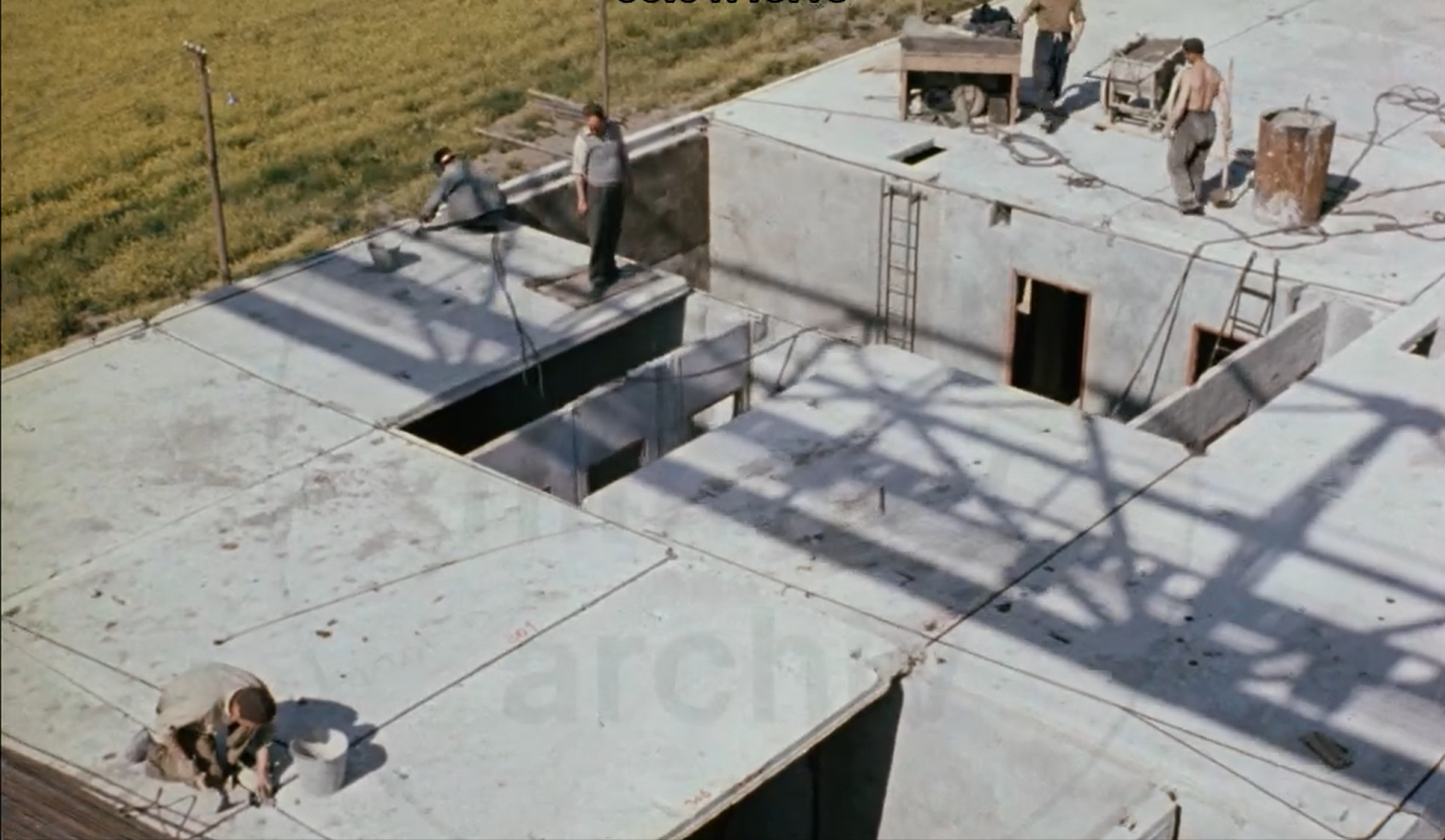
Domy z panelů [Prefabricated Houses] (Jiří Menzel, 1959) – Czechoslovakia, 7 minutes
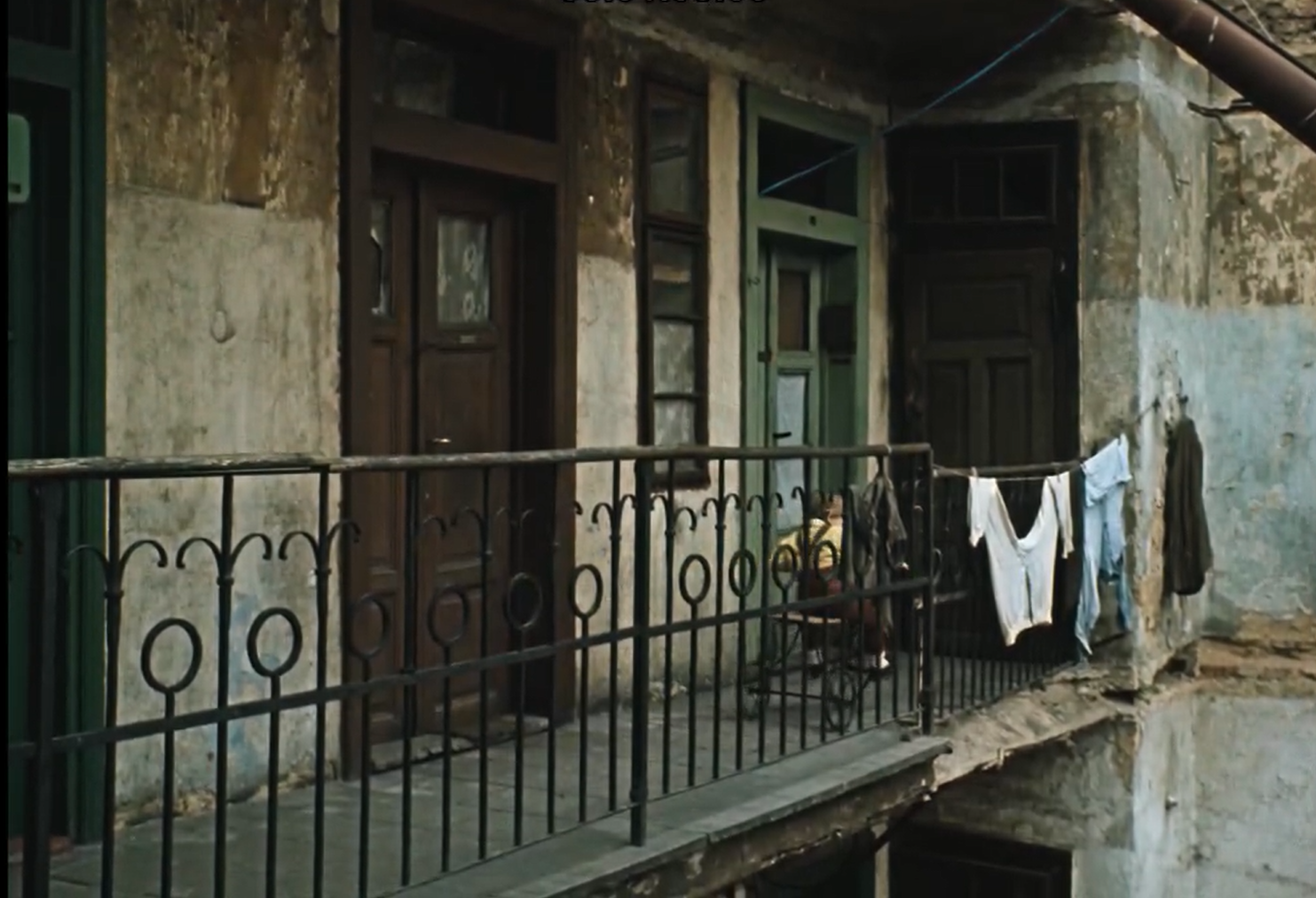
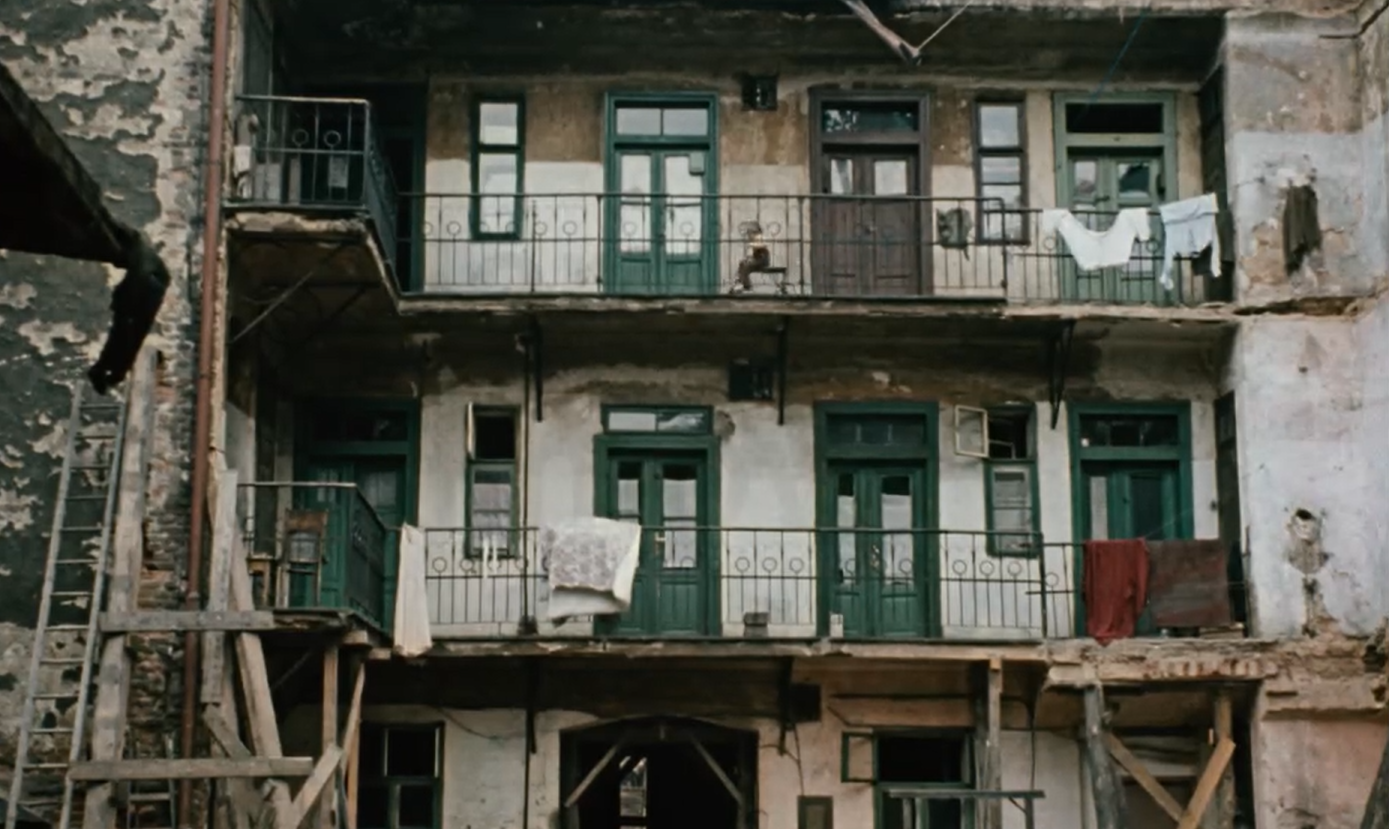
Made in 1959 by Jiří Menzel while he was a student at the Film and TV School (FAMU) in Prague, the documentary contrasts scenes of everyday life in the courtyards of dilapidated buildings in older neighbourhoods with the promise of a new city built from prefabricated elements.
Gleaming in the bright sunlight like giant insects, construction machines operated by workers assemble the enormous panels of future homes, which rise in orderly rows across the urban landscape. The principles expressed in the film’s narration echo some of the ideals of modernist urban planning, from the aspiration to provide “housing for all” to the emphasis on access to natural light, fresh air, and greenery.
Zablácené město [The Mud-Covered City] (Václav Táborský, 1963) – Czechoslovakia, 9 minutes
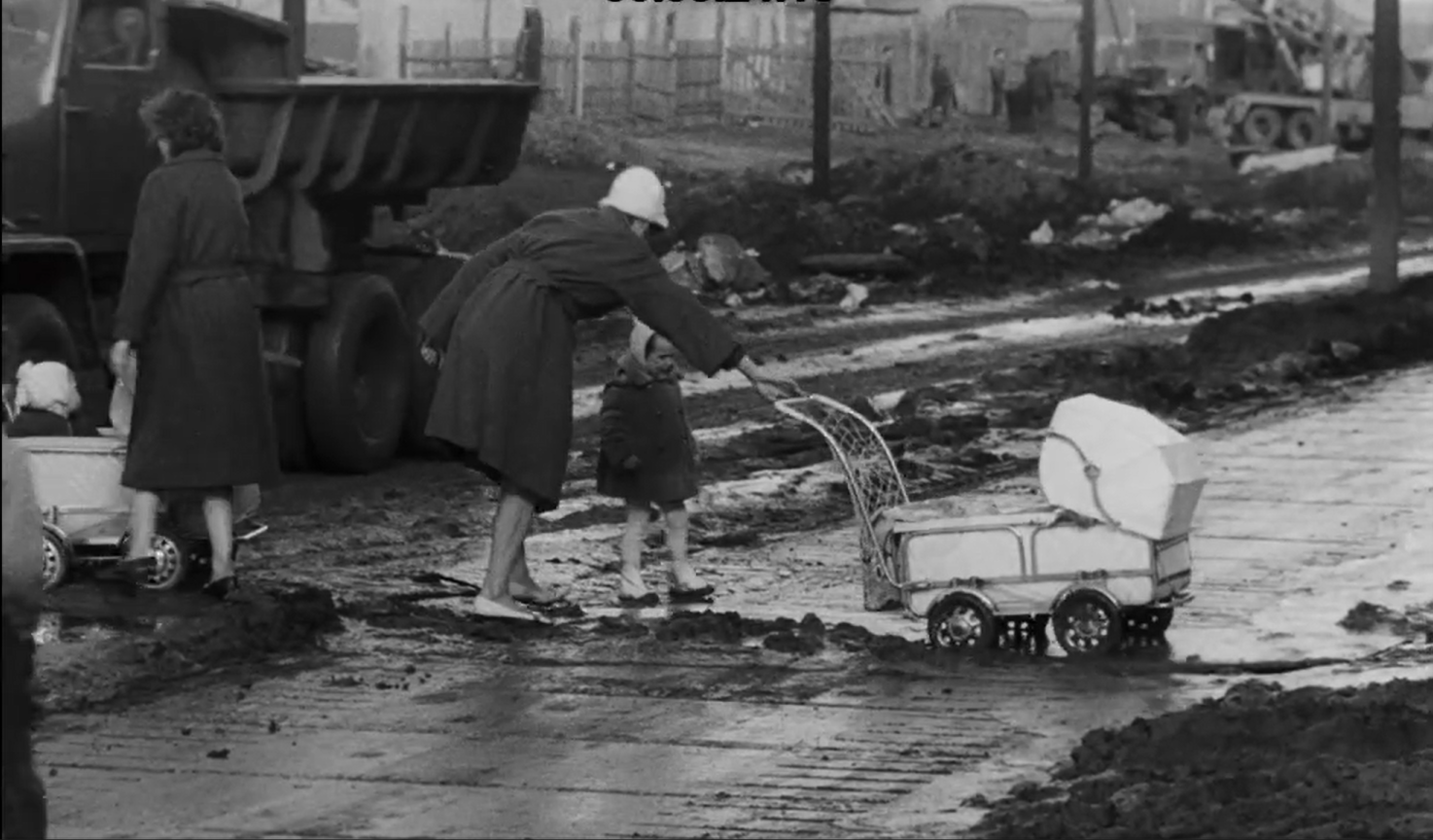
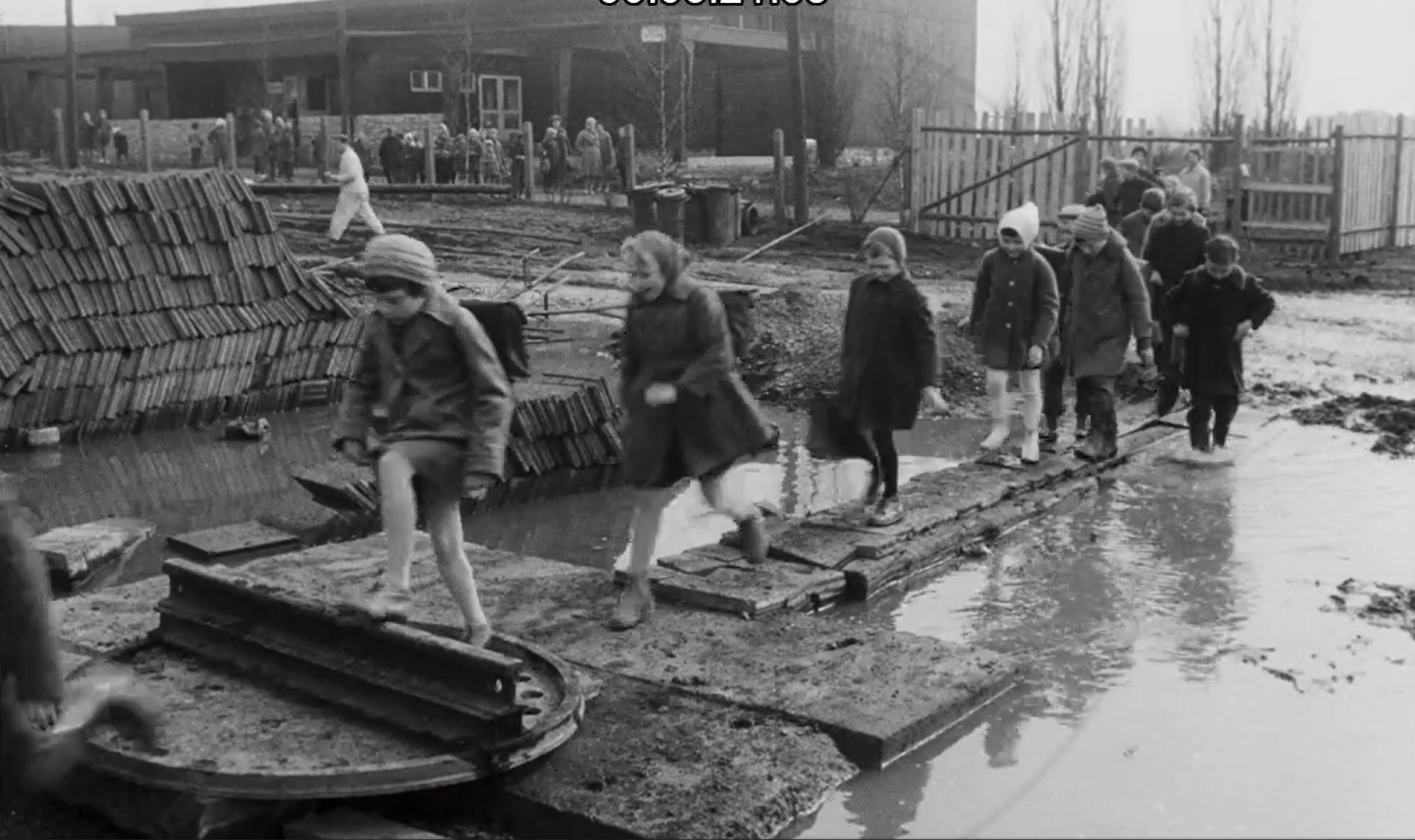
Associated with the progressive Czechoslovak documentary movement of the 1960s, Václav Táborský developed a personal approach to cinéma vérité in his exploration of the realities of socialist society, capturing everyday life in Prague’s new housing estates, where residents begin their lives surrounded by unfinished construction sites.
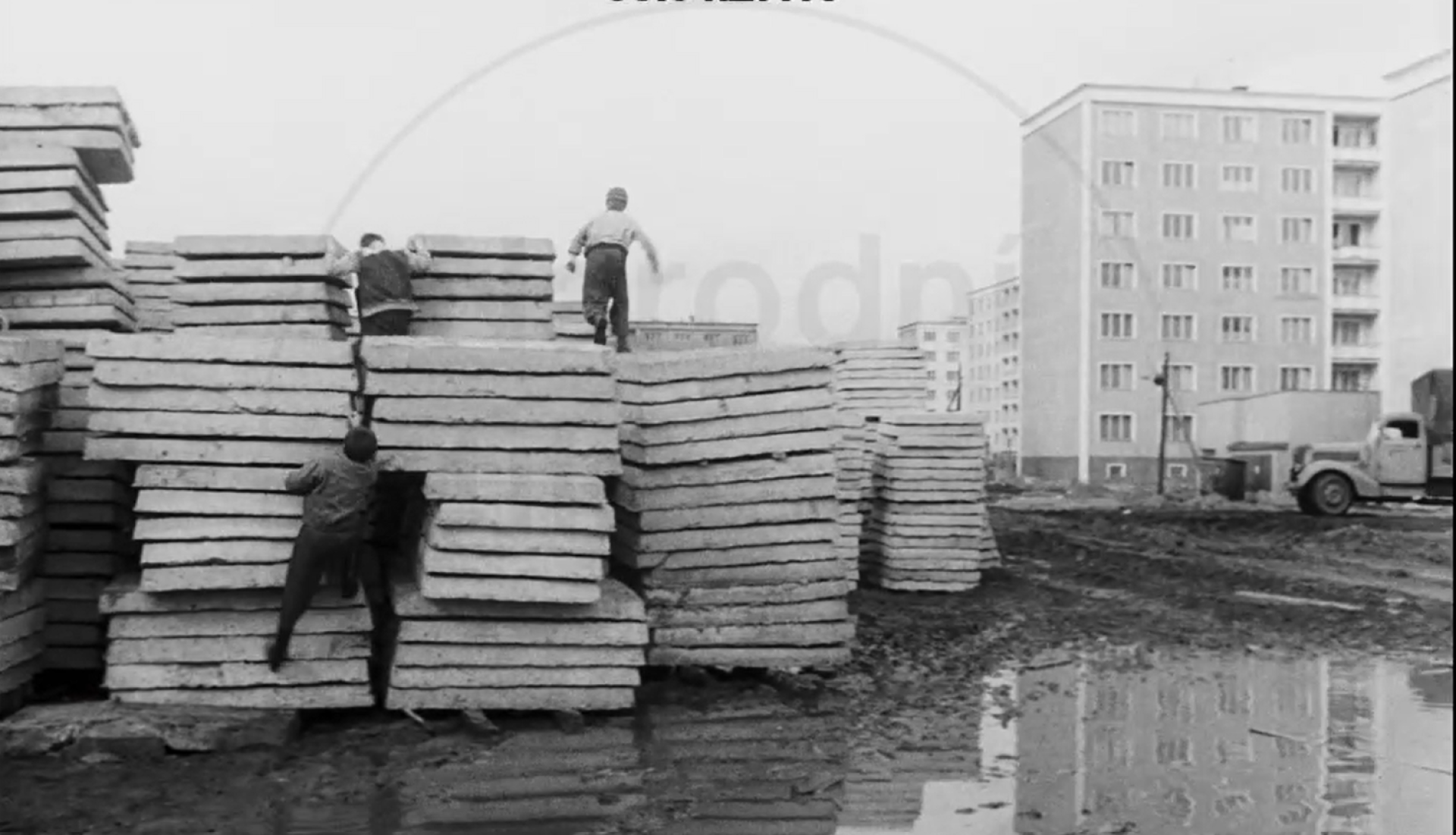
Reflected in puddles, carried on the soles of shoes, and stubbornly scraped off footwear, mud seems to be an inescapable feature of these newly built neighbourhoods. To reach their homes, residents must cross active construction sites every day, weaving between excavators and trucks, wearing boots and carrying a change of shoes in their bags. Children, meanwhile, turn the mud and abandoned building materials into opportunities for play.
Through humorous editing and unexpected visual associations, in which rows of apartment blocks resemble matchboxes and prefabricated panels look like stacks of biscuits, the documentary captures both the excitement of moving into new homes and the small absurdities of life in a neighbourhood still under construction.
O Nowej to Hucie [About Nowa Huta…] (Bronisław Cieślak, 1974) – Poland, 21 minutes
Marking the 25th anniversary of Nowa Huta, the film sets out to create a portrait of this industrial district of Kraków. Using the search for the neighbourhood’s first building as a starting point, the film explores residents’ perceptions of its origins through street interviews.
Archival footage, together with testimonies from the first residents, documents the construction and development of the neighbourhood alongside that of its steelworks. Combining memories of the builders’ experiences with the everyday routines of residents in the 1970s, the film presents Nowa Huta not only as the product of scientific urban planning, but also as a lived-in neighbourhood shaped by an established urban community.
Ioane, cum e la construcții [Ioane, What’s It Like Working in Construction?] (Sabina Pop, 1983) – Romania, 13 minutes
In striking contrast to the cheerful, optimistic pop song playing on the soundtrack, the camera captures the bleak landscape on the outskirts of Bucharest, seen from the bus that carries young construction workers living outside the city to work each morning.
Having recently graduated from the Directing Department of IATC, director Sabina Pop finds her subjects among young people her own age. Their brief accounts are woven into the documentary’s soundtrack: young men and women working in construction describe, in their own voices, life on the building site as well as their dreams. The most pressing of these is to be allocated an apartment in the city and leave behind life in dormitories for unmarried workers.
Leben in Marzahn – Ein Filmteam fragt sich durch [Life in Marzahn – A Film Crew Asks Around] (Peter Klotz, 1987) – German Democratic Republic, 28 minutes
Using a temporary apartment exchange that brings its young protagonist to Marzahn, on the outskirts of East Berlin, for a month, this report produced for East German television offers a sociological exploration of one of the city’s largest housing estates.
Through interviews with residents, public administration representatives, and the architects responsible for designing the buildings and communal facilities, the film crew investigates housing conditions and the organisation of everyday life, from access to green spaces, shops, and public transport to recreational facilities.
The exploration continues through the area’s discos, restaurants, and sports clubs, while the report even includes short advertising interludes promoting local businesses, factories, and services.
Programme presented with the support of:
Czech Centre, Polish Institute, German Embassy, One World Romania.
Ana Szel
Ana Szel is a researcher, curator, PhD candidate, and teaching assistant at the “I.L. Caragiale” National University of Theatre and Film (UNATC) in Bucharest, where her doctoral research focuses on useful cinema in socialist Romania.
With an academic background in music and film, she is among the founders of a new master’s programme dedicated to the preservation and curation of audiovisual archives. She has worked with film archives since 2016, and her research interests include marginal filmmaking practices, silent cinema, and cinema as a field of interdisciplinary research.
In 2022, together with Christian Ferencz-Flatz, she organised the first international conference dedicated to useful cinema under state socialism, held in Bucharest. She is also co-editor, alongside Lucie Česálková and Christian Ferencz-Flatz, of Useful Cinema in State Socialist Europe, published by Routledge.
She is a doctoral researcher within the project Philosophy in Late Socialist Europe: Theoretical Practices in the Face of Polycrisis at Babeș-Bolyai University in Cluj-Napoca, and the PCE research project The Emerging Aesthetics of the Commodity: An Interdisciplinary Approach to Advertising Film in Postsocialist Romania at UNATC.
Alex Axinte
Alex Axinte is an architect, researcher, and lecturer in the Department of Landscape Architecture at the Faculty of Horticulture, University of Agronomic Sciences and Veterinary Medicine of Bucharest (USAMV), and a New Europe College Fellow (2025–2026).
He holds a Master of Social Sciences (2018) and a PhD in Architecture (2024) from the University of Sheffield. His research focuses on informal practices of managing shared spaces in the context of collective housing in the post-socialist city.
He initiated and coordinated the Garaj DESCHIS project space (2020–2025) in Bucharest’s Drumul Taberei neighbourhood, which led to the research project Map of Neighbourhood Libraries (2022). He also co-edited Telling the Story. New Towns | New Narratives, published by INTI, Rotterdam (2025).
Irina Tulbure
Irina Tulbure is an architect whose work involves documenting, researching, teaching, and writing about architecture from the recent past, exploring how this heritage can be understood, reassessed, and embraced today.
She has been involved in various cultural projects, exhibitions, and summer schools dedicated to these subjects.
She is an Associate Professor in the Department of Architectural History and Theory and Heritage Conservation at the “Ion Mincu” University of Architecture and Urban Planning (UAUIM) in Bucharest. She was a Getty–New Europe College Fellow (2011–2012), collaborated with the Union of Architects of Romania on its photographic archive (2014–2017), and earned her PhD in Architecture from UAUIM in 2011.
She is the author of Architecture and Urban Planning in Romania, 1944–1960: Constraint and Experiment (2016).
Gruia Bădescu
Gruia Bădescu is a researcher in architectural history, urban studies, and memory studies, as well as an urban designer. Both his research and professional practice focus on post-socialist cities, mobility and public space, and post-conflict cities, particularly in the former Yugoslavia and Beirut, examining the relationship between urban transformations, memory, and the management of difficult pasts.
He has also studied how societies in Latin America engage with the legacies of dictatorships and political violence through architectural, forensic, and memorial approaches.
He holds a PhD in Architecture from the University of Cambridge, with a dissertation on reconstruction in the former Yugoslavia, and a master’s degree in Urban Design and Social Science from the London School of Economics.
He is a researcher at the University of Konstanz and a visiting lecturer at SNSPA in Bucharest. As a New Europe College Fellow (2026–2027), he is working on a book about urban imaginaries of modernity, destruction, and reconstruction.
Mihai Burcea
Mihai Burcea ias a graduate of the Faculty of History at the University of Bucharest, where he also earned his PhD with the dissertation Fighting for an Illusion: Romnian Volunteers in the International Brigades in Spain (2017).
He worked as a Research Fellow at the National Institute for the Study of Totalitarianism (2018–2023) and is currently an associate researcher at the “Florin Constantiniu” Centre for Russian and Soviet Studies in Bucharest.
He is a founding member of the civic association Miliția Spirituală (2002).
His recent publications include “Defending the State Order”: The Secret Police’s Pursuit of Gheorghe Crosneff in Interwar Romania (University of Bucharest Press, 2016); The Spectres of Dej (co-editor, with Ștefan Bosomitu, Polirom, 2012); Mihail Roller (1908–1958): A Short Biography (with Ștefan Bosomitu, in IICCMER Yearbook, vol. VII, Polirom, 2013); and “The Party’s Inquisitors”, I. Elvira Gaisinschi, published in Arhivele Totalitarismului, vol. XXVIII, nos. 106–107, 1–2/2020.
- Director:
- —
- Year:
- —
- Country:
- —
- Genre:
- Projection + discution
- Duration:
- —
- Language:
- —
- Subtitles:
- —
- Screening:
- Saturday, 7 November, Cinema Elvire Popesco